
For better tomorrows, da Vinci may be the answer for you.
Advanced care, close to home.
What is da Vinci robotic-assisted surgery?
Da Vinci robotic-assisted surgery is a proven minimally-invasive approach that has been trusted by surgeons for over 20 million patients worldwide. With da Vinci, your surgeon operates through small incisions—sometimes as few as one—instead of one large cut. Depending on the procedure, this approach can mean smaller scars, less pain, and a shorter recovery compared to traditional surgery.
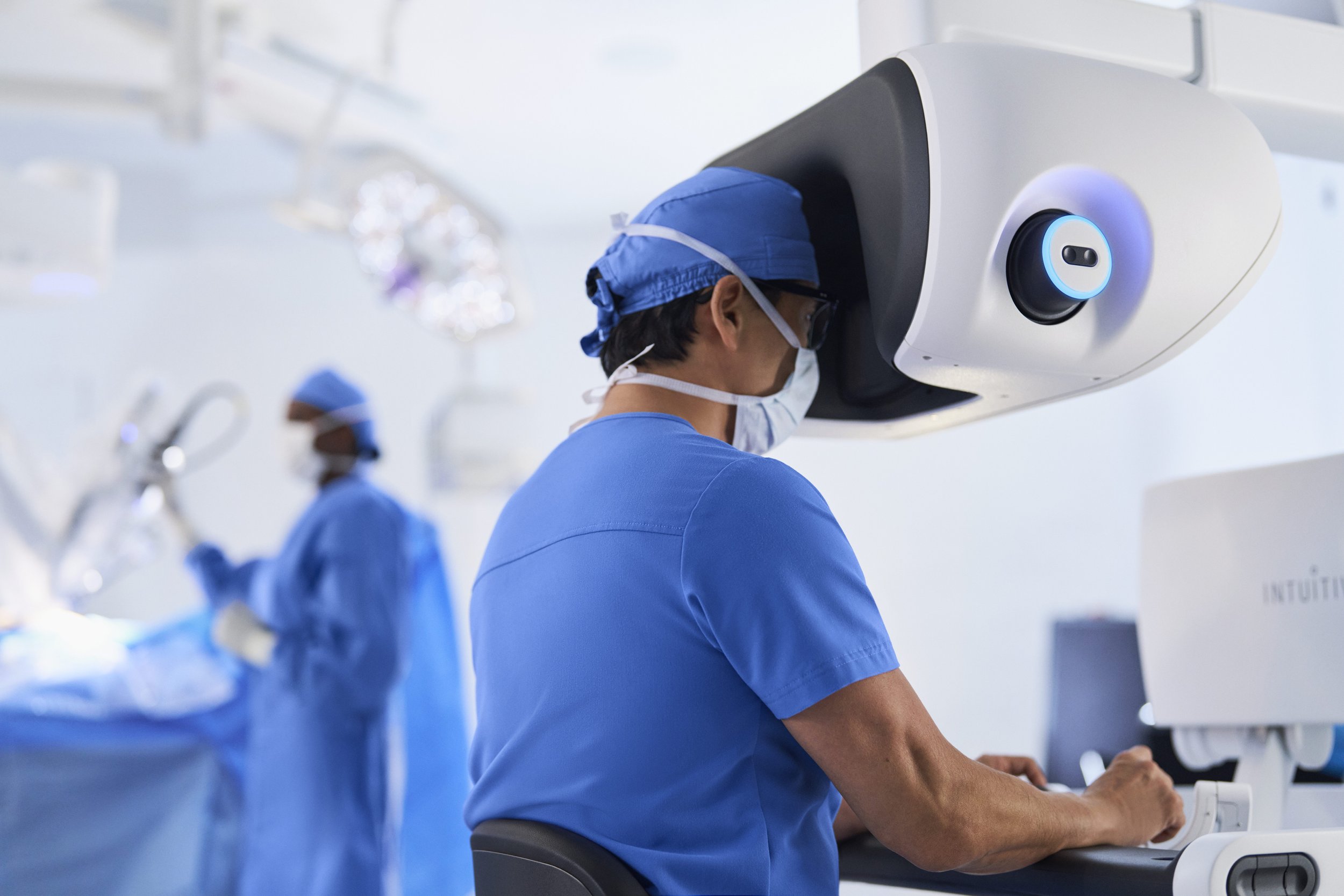
During the operation, your surgeon sits at a nearby console and controls the surgical instruments. As your surgeon moves their hands, the da Vinci system translates those movements into smaller, precise movements of the specialized instruments being used. These instruments are designed to bend and rotate in ways the human hand can't. This helps them work more easily in small or hard-to-reach areas.
Your surgeon does the surgery.
The name "da Vinci" includes the word "robotic," but the system doesn't move or make decisions on its own. Dr. del Pino is always in control—da Vinci is a tool designed to enhance his skills, not replace them.
Proven. Safe. Trusted.
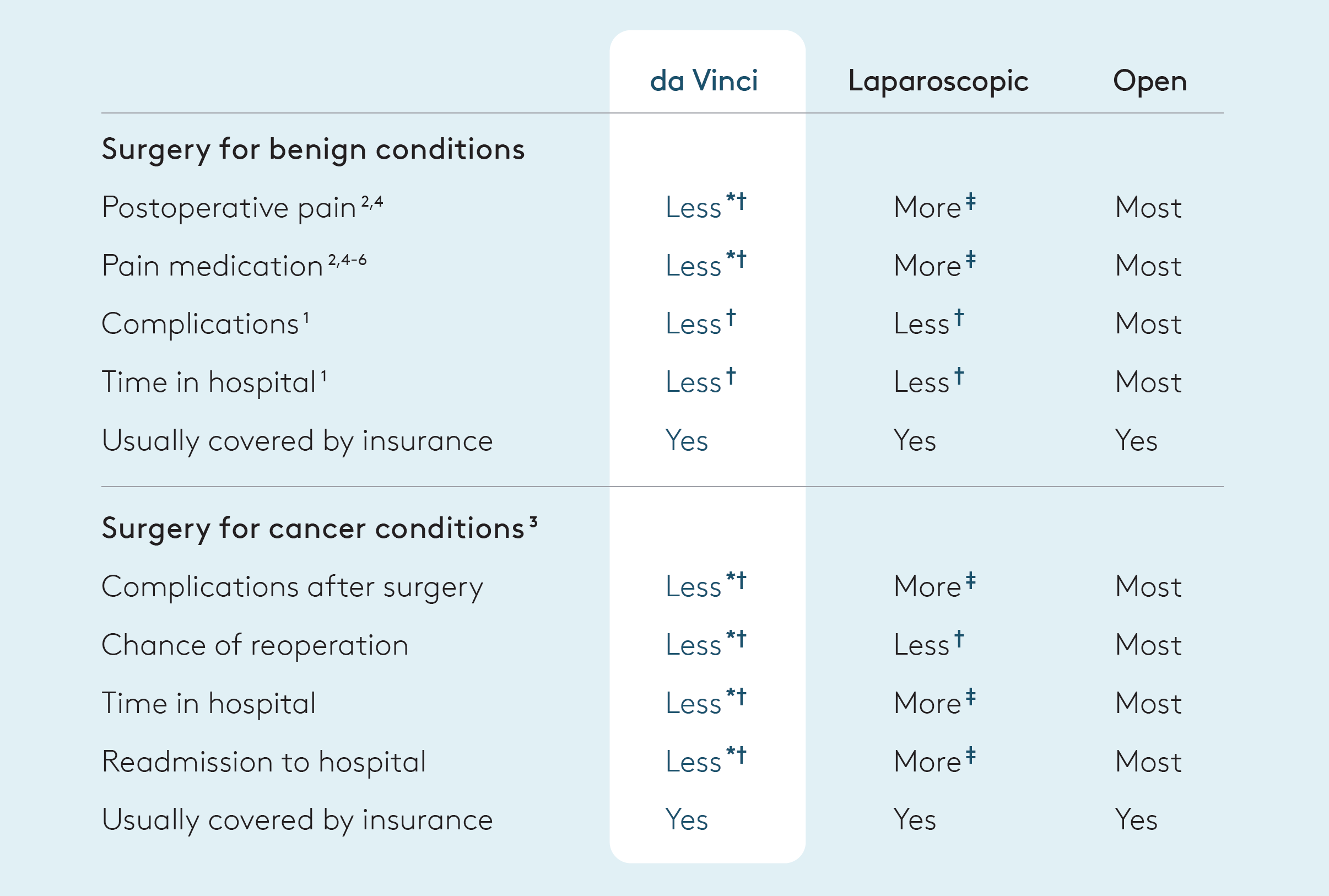
When it comes to surgery, here’s how surgical approaches compare.
Da Vinci surgery is safe and effective for performing certain procedures when used appropriately and with proper training.7 These are common results for many procedures. Individual outcomes may depend on a number of factors—including, but not limited to—patient characteristics, disease characteristics, and/or surgeon experience.
Frequently asked questions about da Vinci robotic-assisted surgery.
-
Da Vinci robotic-assisted surgery is a minimally invasive surgical approach that allows your surgeon to operate through small incisions using slender, specialized instruments.
-
No. The da Vinci system does not perform surgery on its own. Your surgeon controls the instruments throughout the procedure.
-
For many procedures, da Vinci may mean less pain, less time in the hospital, and a shorter recovery compared with traditional open surgery. Your doctor can help you understand what that could look like for you.
-
All surgery has risks, whether it is open, laparoscopic, or robotic-assisted. Da Vinci has been trusted by surgeons for over 20 million patients worldwide, but it is not right for every patient or procedure. Your doctor can help you understand the risks and benefits based on your condition and care plan.
-
Da Vinci allows surgeons to see your anatomy during operations more clearly and use small instruments designed to move in small or hard-to-reach spaces. Because the approach is minimally invasive, it may help reduce the impact of surgery on the body and, for many procedures, may mean less pain, less time in the hospital, and a shorter recovery.
-
Laparoscopic surgery, like da Vinci, is minimally invasive. Both use a camera and
instruments inserted through small incisions.
During laparoscopic surgery, surgeons stand next to patients and use long-handled
instruments while looking at a video screen.
During da Vinci surgery, surgeons sit at a console in the operating room. The console gives them a 3D magnified view of where they’re operating. From the console,
surgeons move miniaturized instruments that offer a greater range of motion than
laparoscopic instruments. This can help surgeons work in delicate and hard-to-reach spaces.
-
In the U.S., da Vinci surgery is usually covered by insurance, but coverage can vary. If your doctor recommends da Vinci, check with your insurance company to understand if your procedure is covered.
-
Consider asking:
• Am I a candidate for da Vinci surgery for my condition?
• How do the risks and benefits of da Vinci compare with other surgical options?
• How much experience do you have with this procedure?
• How long will I be in the hospital?
· How long is the recovery time, and will I need care at home?
• What restrictions should I expect after surgery?
• Is my procedure covered by my insurance?